Posts

Showing posts with the label Sitar Gharana

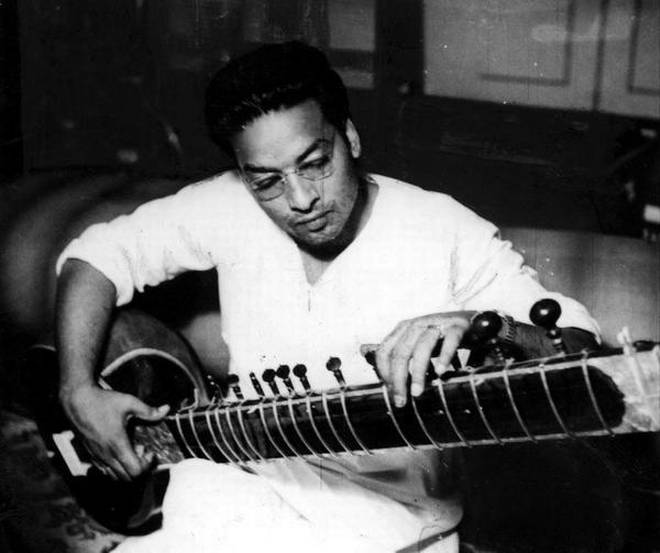
Ustad Vilayat Khan : STYLE OF PLAYING (ANG)
Image
Ustad Vilayat Khan Excerpts from the book ‘Komal Gandhar’ STYLE OF PLAYING (ANG) My Sitar demonstrates the fusion of instrumental and vocal music – this is what the whole world is saying – I never needed to say it myself. So, can I explain a little about it? It is the opinion of some people that my grandfather Imdad Khan Saheb introduced the ‘Gayaki Ang’. No – Imdad Khan Saheb’s style of playing was the ‘Tantra Ang’ – ‘Dhrupad Ang’ on the Surbahar. And there were ‘Gat Todas’ of the ‘Tantra Ang’ which was a part of the Sitar. Then from Inayat Khan came the ‘Sapat Tan’. The playing of ‘Tihais’. This was all the innovation of Inayat Khan Saheb. Then let us take ‘Peshkara’ – of Jantanat Khan Saheb, Tarrale Khan Saheb, Kaale Khan Saheb, Mian Baksh Khan Saheb – then Kallu Hafeez, Bhairon Maharaj – of the Tabla of these great masters. ‘Purbi Baaj’, ‘Farkkabadi Baaj’, ‘Delhi Baaj’. This ‘Peshkara Baaj’ of the Tabla was introduced into Sitar by Inayat Khan Saheb. And the playing of ‘...

Different Sitar Gharanas

All the Gharanas are mentioned except Etawah Gharana and Maihar Gharana - which are treated as the most prominent Sitar Gharanas today. There are several articles available on Internet on these two Gharanas and Maestros. Jaipur Sitar Gharana Bahadur Sen, son of legendary Masit Khan used to stay in Jaipur and continued to play Sitar. They used to use title ‘Sen’ after their names as they claimed themselves to be descendants of Miyan Taan Sen, i.e. member of Senia Gharana. Masit Khan’s nephew, Dulha Khan was n extraordinary Sitarist of his time. Rahim Sen,  son of Sukh Sen, the ‘mul-purush’ of Senia Gharana , married the daughter of Dulha Khan. Rahim Sen got talim from both, father Sukh Sen and father-in-law Dulha Khan. Rahim Sen and his brother Hussain Khan were very popular Sitarists of their time. Amrit Sen(1813-1893), son of Rahim Sen was a Sitarist of very high caliber. He was patroned by Ram Singh Maharaja. Amrit Sen tried to imitate ‘Karak-Bijli’ taan of Gowalior expon...

Sitar Repertoire of Ancient Jaipur-Senia Sitarists

Image
Structural Changes on Sitar: Perhaps the most popular ancient string instrument of India, Sitar has reached an unparallel height over the time. The word ‘Sitar’ comes from Persian word ‘She-tar’ the literal meaning of which is ‘Instrument of three strings’. But this is far from sufficient to describe the current form of the instrument. Opinions differ regarding the origin of Sitar. Some of musicologists think that Indian ‘Veena’ was popular as Sitar in Middle East. Others say, Indian three-stringed Veena was called Sitar. In 13 th century, the court musician of Khilji Empire Ala Uddin Khilji was Hazrat Amir Khusro (Bulbul-E-Hind). He was a great poet of that time and writer of many famous books which are regarded as most authentic. It is believed by forefathers of Etawah Gharana that Hazrat Amir Khusro himself was inventor of Sitar. Perhaps, he added three more strings with the four strings of Veena of South India. In Veena, strings were rotated on the peg in opposite direc...